How to Get a Certificate of Analysis on Your Store
Three simple steps to upload, manage, and display your Certificates of Analysis online
Upload Certificates of Analysis
Bulk upload your Certificates of Analysis with CSV + ZIP or add them individually. Automatically link COAs to products in your inventory.
Display COAs on Your Website
Generate customizable COA display widgets with your choice of themes. One-click embed codes for Shopify, WooCommerce, or any platform.
Verify & Track COA Compliance
Automatic expiration alerts ensure your Certificates of Analysis stay current. Real-time updates so customers always see verified, up-to-date lab results.
No credit card required • 14-day free trial
See Certificate of Analysis Management in Action
Watch how easy it is to upload, manage, and display Certificates of Analysis on your ecommerce store. Build customer trust with transparent, verified lab results.
Ready to see how coanalysis can transform your cannabis ecommerce store?
Quality Control Document Management
Our comprehensive platform provides everything you need to manage Certificates of Analysis. An intuitive dashboard to upload, organize, verify, and track all your quality control documents.
Complete COA Dashboard Overview
Get a bird's-eye view of all your Certificates of Analysis with real-time metrics, expiration tracking, and quick actions for managing quality control documents.
- Real-time certificate and product counts
- Team member management at a glance
- Quick action buttons for common tasks
- Recent activity feed for audit trails

Certificate of Analysis Management
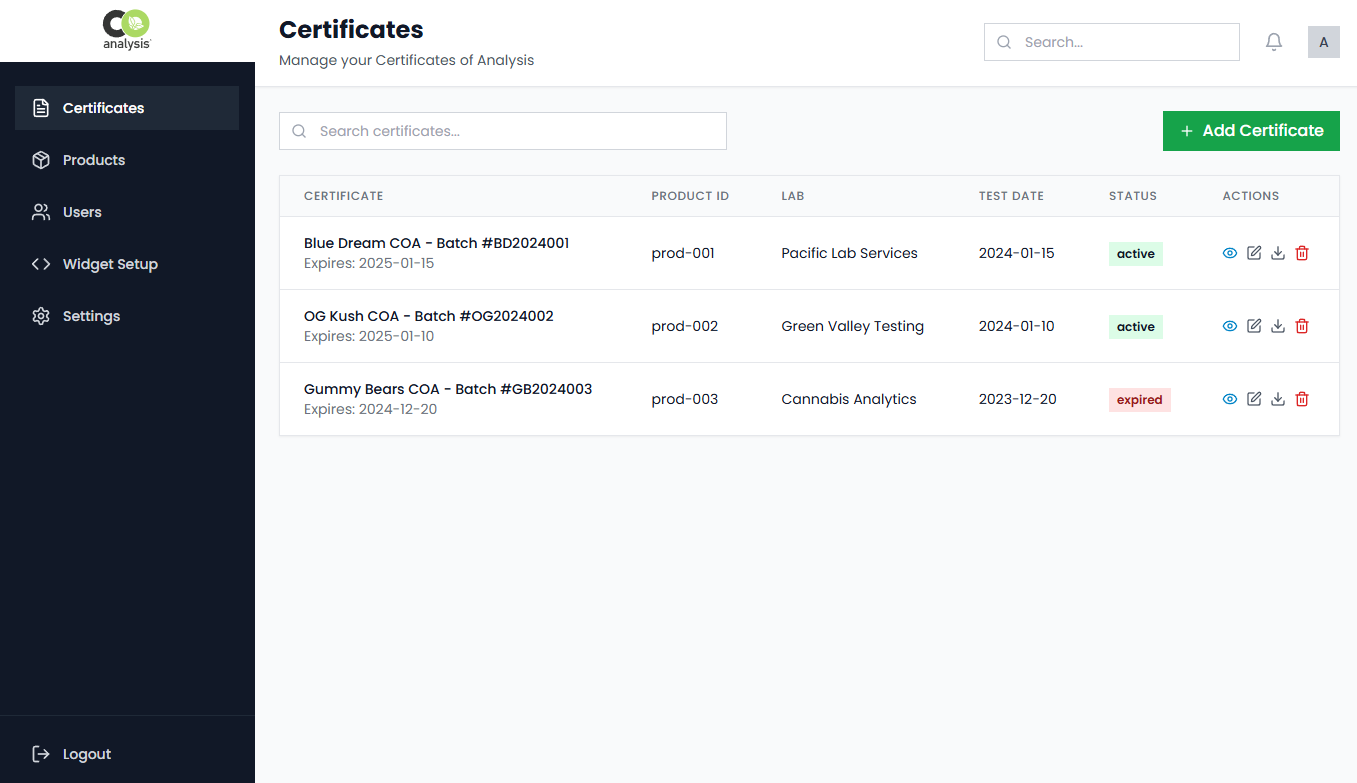
Organize and track all your Certificates of Analysis in one place. Powerful search, filtering, and status monitoring to meet COA compliance requirements.
- Batch tracking with expiration dates
- Lab verification and status tracking
- Quick actions for view, edit, and download
- Automated expiration alerts
Product Catalog Integration
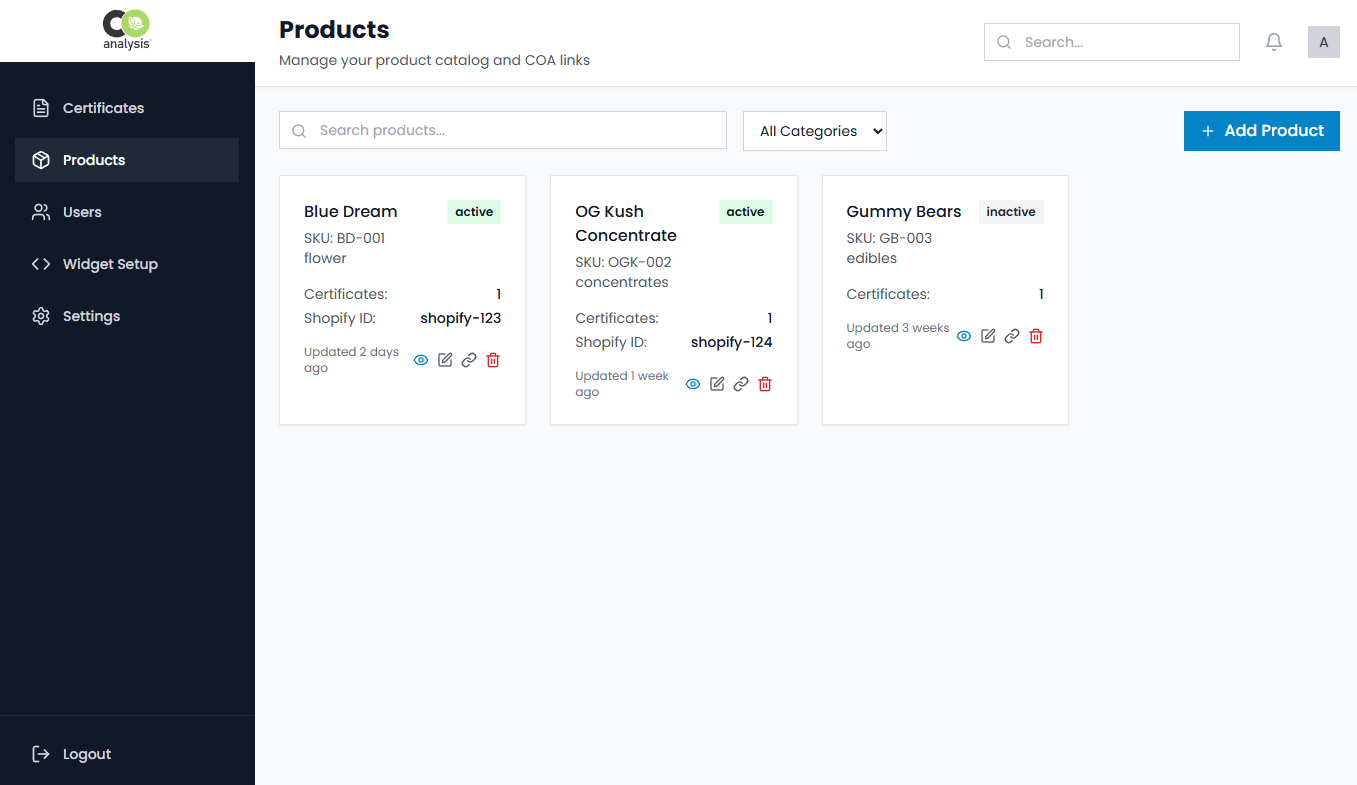
Link your products directly to their certificates with seamless ecommerce platform integration.
- Direct Shopify and WooCommerce sync
- Product-to-certificate linking
- Category-based organization
- Real-time status updates
Role-Based Team Management
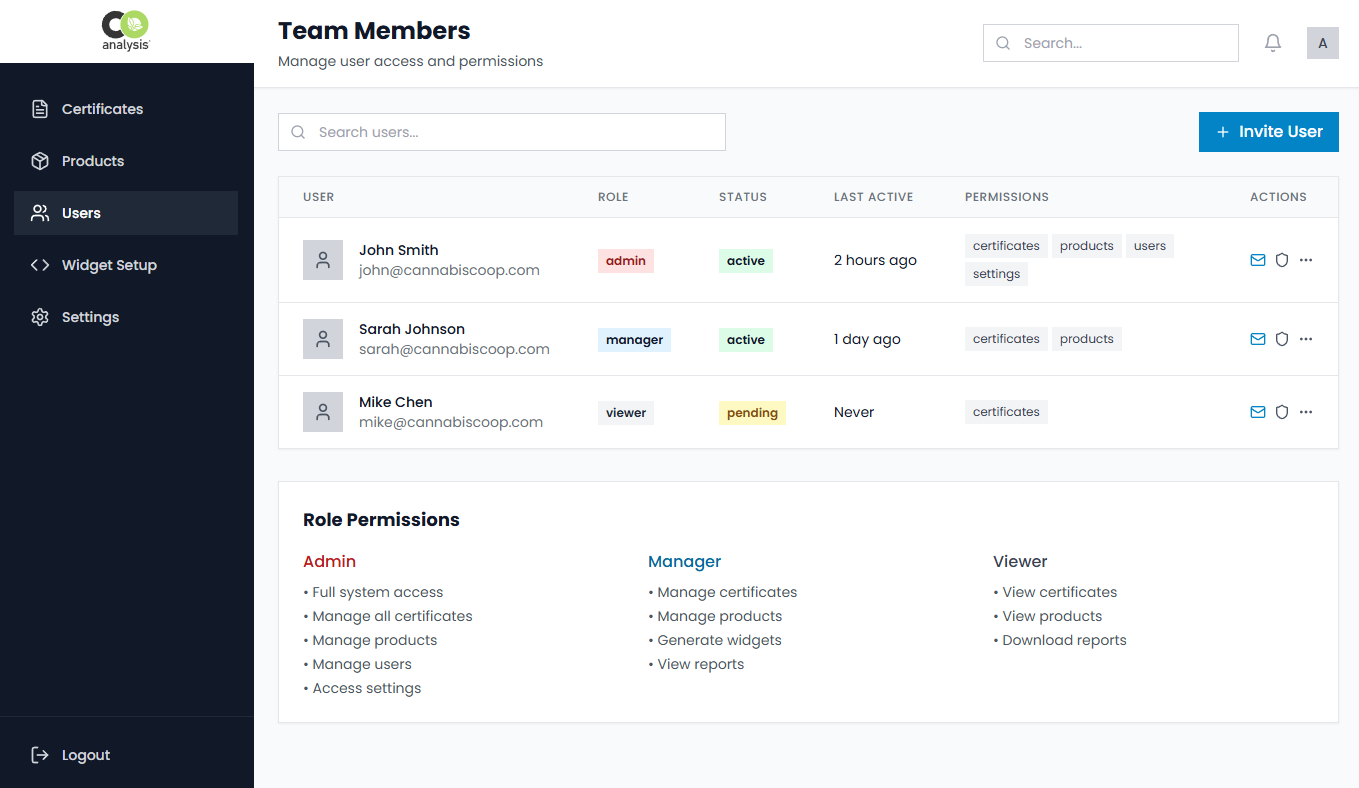
Control access and permissions with granular role management designed for compliance teams.
- Admin, Manager, and Viewer roles
- Granular permission controls
- Activity tracking and audit logs
- Easy user invitation and management
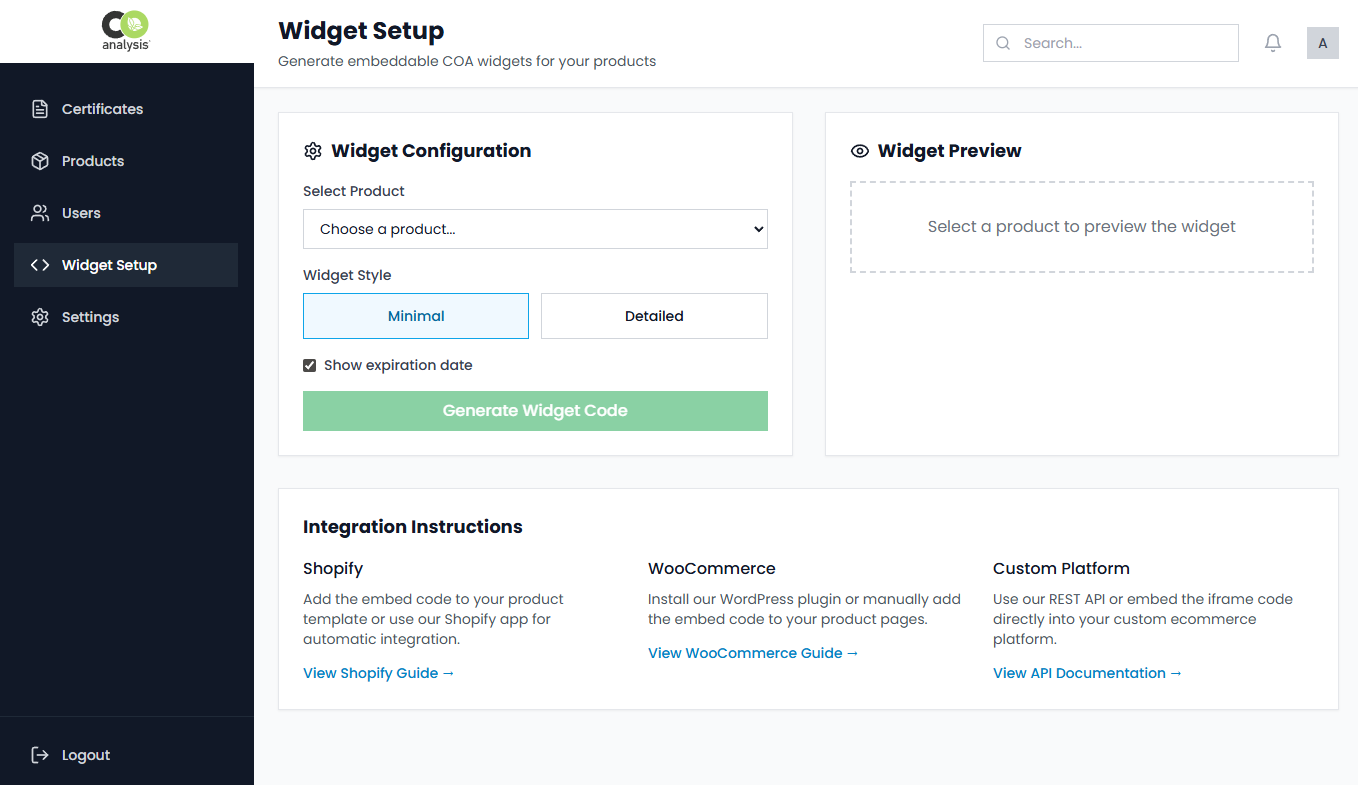
Display Certificates of Analysis Online
Generate embeddable COA widgets that let customers view and verify your Certificates of Analysis directly on your product pages. Seamlessly integrate with any ecommerce platform.
- Minimal and detailed widget styles
- Live preview before deployment
- Platform-specific integration guides
- One-click code generation
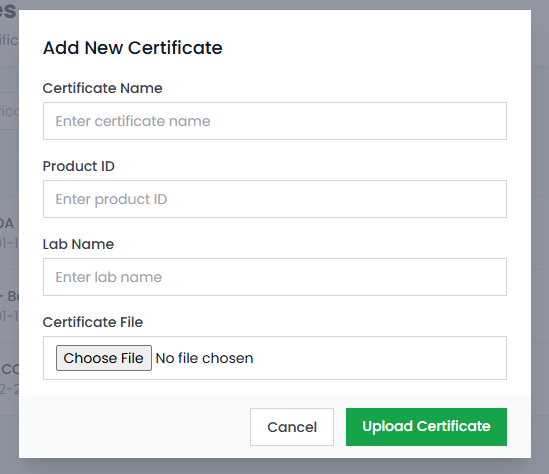
Upload Certificates of Analysis
Upload new Certificates of Analysis with ease. Our streamlined form captures all required COA data including lot numbers, expiration dates, and lab information for complete compliance records.
- Drag-and-drop file upload
- Automatic product linking
- Lab verification integration
- Instant validation and processing
Certificate of Analysis Software Features
Everything you need to manage, verify, and display Certificates of Analysis
Batch COA Import
Upload hundreds of Certificates of Analysis at once with CSV + ZIP bulk import. Real-time progress tracking and automatic product linking.
Smart Expiration Alerts
Automatic email notifications for certificates expiring in 7, 14, or 30 days. Never miss a compliance deadline again.
COA Display Widgets
Display Certificates of Analysis directly on product pages. Choose from 5 themes, multiple display modes, and platform-specific embed codes.
Native Platform Integration
OAuth-based Shopify connection and WooCommerce plugin. Automatic product sync and one-click widget deployment.
Role-Based Permissions
3-tier access control: Owner, Staff Member, and Lab Technician roles. Granular permissions for certificates, products, and settings.
Secure COA Storage
Enterprise-grade storage for all Certificate of Analysis PDFs. Encrypted transmission and secure access ensure your quality control documents stay protected.
Real-Time Synchronization
WebSocket-powered live updates. Changes to certificates and products sync instantly across all your widgets and locations.
Flexible Token System
Purchase tokens as needed with volume bonuses. Track usage history and get 50 tokens included monthly with your subscription.
REST API Access
Full API access for custom integrations. Build your own tools, automate workflows, and integrate with any platform.
Simple, Token-Based Pricing
One affordable plan with flexible token usage
How Tokens Work
Simple, transparent pricing for your COA compliance needs
1 Token = 1 Certificate
Each certificate upload uses one token from your balance
50 Monthly Tokens
Included with your subscription every month
Buy More Anytime
Purchase additional tokens as your business grows
All plans include a 14-day free trial. No credit card required.
Need a custom solution? Contact our sales team
Display Certificates of Analysis on Any Platform
Seamless COA integration with all major ecommerce platforms
Shopify
Native app integration with automatic product sync
WooCommerce
WooCommerce Rest API OAuth
Custom Platforms
REST API and embed codes for any platform
Trusted by Cannabis Professionals
See what our customers are saying about coanalysis
Frequently Asked Questions About Certificates of Analysis
Everything you need to know about COAs, compliance requirements, and how to manage them
What is a Certificate of Analysis (COA)?
A Certificate of Analysis (COA) is a document issued by a testing laboratory that confirms the composition, purity, and quality of a product. It typically includes test results for potency, contaminants, heavy metals, pesticides, and other specifications required by regulatory bodies. COAs are essential for product transparency, consumer safety, and regulatory compliance across industries including supplements, food products, pharmaceuticals, and cannabis.
What is a Certificate of Analysis used for?
A Certificate of Analysis is used to verify that a product meets quality and safety standards before it reaches consumers. Businesses use COAs to demonstrate regulatory compliance, build customer trust, and provide product transparency. Consumers and retailers rely on COAs to confirm the authenticity, purity, and potency of products. In ecommerce, displaying COAs on product pages increases buyer confidence and can directly improve conversion rates.
Who needs a Certificate of Analysis?
Any business selling products that require quality verification needs Certificates of Analysis. This includes cannabis dispensaries and brands, supplement manufacturers, food and beverage producers, pharmaceutical companies, cosmetics brands, and chemical suppliers. Many states legally require COAs to be accessible to consumers, especially in the cannabis industry. Even when not legally required, providing COAs demonstrates professionalism and builds consumer trust.
What are the key components included in a Certificate of Analysis?
A typical Certificate of Analysis includes: the product name and batch/lot number, the testing laboratory name and accreditation, the date of testing and expiration date, detailed test results (potency, contaminants, pesticides, heavy metals, microbials), pass/fail determinations against regulatory limits, the testing methodology used, and the authorized signature of the lab director or quality assurance manager. The specific requirements vary by industry and jurisdiction.
How do I read and understand a Certificate of Analysis?
To read a Certificate of Analysis, start by verifying the lab name and accreditation. Check the lot/batch number matches your product. Review the test date and ensure the COA hasn't expired. Look at each test category (potency, contaminants, etc.) and compare results against the listed acceptable limits. "Pass" indicates the product meets standards; "Fail" means it does not. Pay attention to units of measurement (mg, ppm, %) and understand that ND (Not Detected) means the substance was below detectable levels.
How to verify a COA's authenticity?
To verify a Certificate of Analysis is authentic, check that the laboratory listed is a real, accredited testing facility. Confirm the lab's accreditation number (ISO 17025 is the gold standard). Cross-reference the lot number on the COA with the product label. Contact the lab directly to verify the COA was issued by them. Look for signs of tampering or inconsistencies in formatting. Using a COA management platform like coanalysis ensures all certificates are linked directly from verified sources and displayed securely.
What's the difference between a COA and a CoC (Certificate of Conformance)?
A Certificate of Analysis (COA) provides detailed laboratory test results showing the actual composition and quality metrics of a product. A Certificate of Conformance (CoC) is a declaration by the manufacturer that the product meets specified standards or requirements, but does not typically include detailed test data. COAs are issued by independent laboratories, while CoCs are typically issued by the manufacturer themselves. In regulated industries, a COA carries more weight because it represents third-party verified testing results.
How do you get a Certificate of Analysis for your products?
To get a Certificate of Analysis, send a product sample to an accredited testing laboratory. The lab performs the required tests (potency, contaminants, etc.) and issues a COA with the results. Choose a lab that is ISO 17025 accredited and experienced with your product type. Once you receive your COAs, use a platform like coanalysis to upload, manage, and display them on your ecommerce store so customers can easily access and verify your product quality.
Why is a Certificate of Analysis required?
Certificates of Analysis are required for several reasons: regulatory compliance (many states mandate COA accessibility for cannabis, supplements, and food products), consumer protection (ensuring products are safe and accurately labeled), liability reduction (documented proof of product testing protects against legal claims), and market trust (COAs signal quality and professionalism to retailers and consumers). Businesses that proactively display their COAs often see higher customer confidence and repeat purchase rates.
Who creates a Certificate of Analysis?
A Certificate of Analysis is created by an accredited testing laboratory. The manufacturer or brand sends product samples to the lab, which performs the testing and issues the COA. The lab must be independently accredited (ISO/IEC 17025) to ensure unbiased, reliable results. The COA is then signed by an authorized lab representative. While the lab creates the COA, it's the product seller's responsibility to make it accessible to consumers, which is where COA management software like coanalysis helps.
Ready to Manage Your Certificates of Analysis?
Join hundreds of businesses already using coanalysis to upload, verify, and display COAs online.
Start Free Trial